The biometric-versus-mobile question is usually framed as a technology choice. It is really a workforce question: do your employees report to a fixed location, or do they work wherever the job is?
Biometric devices
Where they work well: single or few fixed sites, shift-based operations, manufacturing, retail outlets, anywhere proxy attendance is a genuine risk.
Advantages
- Very difficult to proxy — the main reason organisations choose it
- No dependence on employee-owned devices
- Works without the employee having a smartphone or data connection
- Accepted and familiar in industrial settings
- One-time hardware cost rather than per-user licensing
Disadvantages
- Only records presence at the device location
- Queues at shift change, which is a real productivity cost at scale
- Fingerprint failure rates rise with manual work and age
- Hardware fails, and when it does, attendance stops
- Requires network connectivity or periodic data collection
- Biometric data carries meaningful privacy and consent obligations
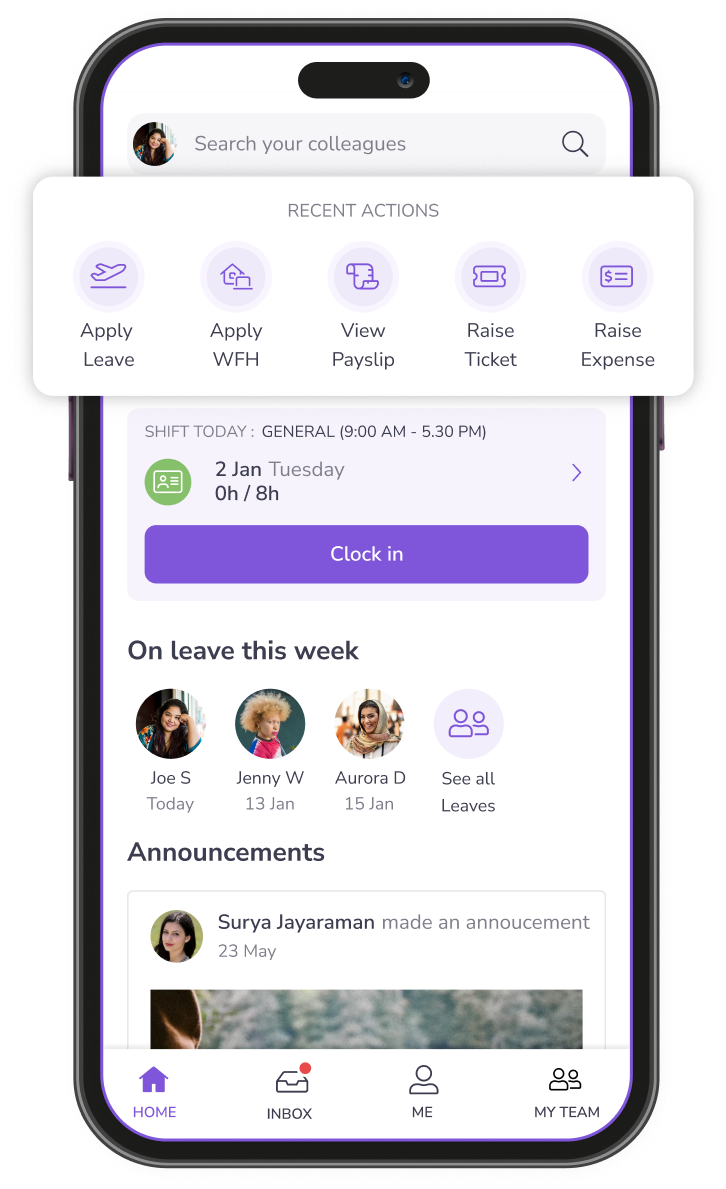
Mobile app attendance
Where it works well: field sales, service engineers, distributed teams, multi-site organisations, remote and hybrid roles.
Advantages
- Works anywhere, which is the entire point
- Geofencing can restrict check-in to approved locations
- Captures location and time of client visits, useful beyond attendance
- No hardware to buy, install or maintain
- Scales to a new location instantly
- Often bundles selfie verification to deter proxying
Disadvantages
- Depends on the employee's phone, battery and data connection
- GPS accuracy degrades indoors and in dense urban areas
- Location tracking generates legitimate privacy objections
- Mock-location apps exist, so spoofing is possible without countermeasures
- Requires every employee to have a suitable smartphone
A direct comparison
- Upfront cost — biometric requires hardware per location; mobile requires none
- Ongoing cost — biometric needs maintenance and replacement; mobile is typically licensed per user
- Proxy resistance — biometric is stronger, though selfie plus geofence plus device binding closes much of the gap
- Location flexibility — mobile wins outright
- Reliability — biometric fails at the device; mobile fails at the phone. Both need a documented fallback.
- Employee acceptance — varies by context. Factory staff often prefer biometric; knowledge workers often resent location tracking.
The hybrid approach most organisations need
In practice, a mixed deployment under a single policy engine:
- Biometric at factories, warehouses and primary offices
- Mobile with geofencing for field staff and multi-site roles
- Web or trust-based check-in for senior and knowledge roles where hours are not the measure
The requirement that matters is that all of it lands in one attendance record, under one set of rules, feeding one payroll run. Multiple capture methods with multiple reconciliation processes is worse than either method alone.