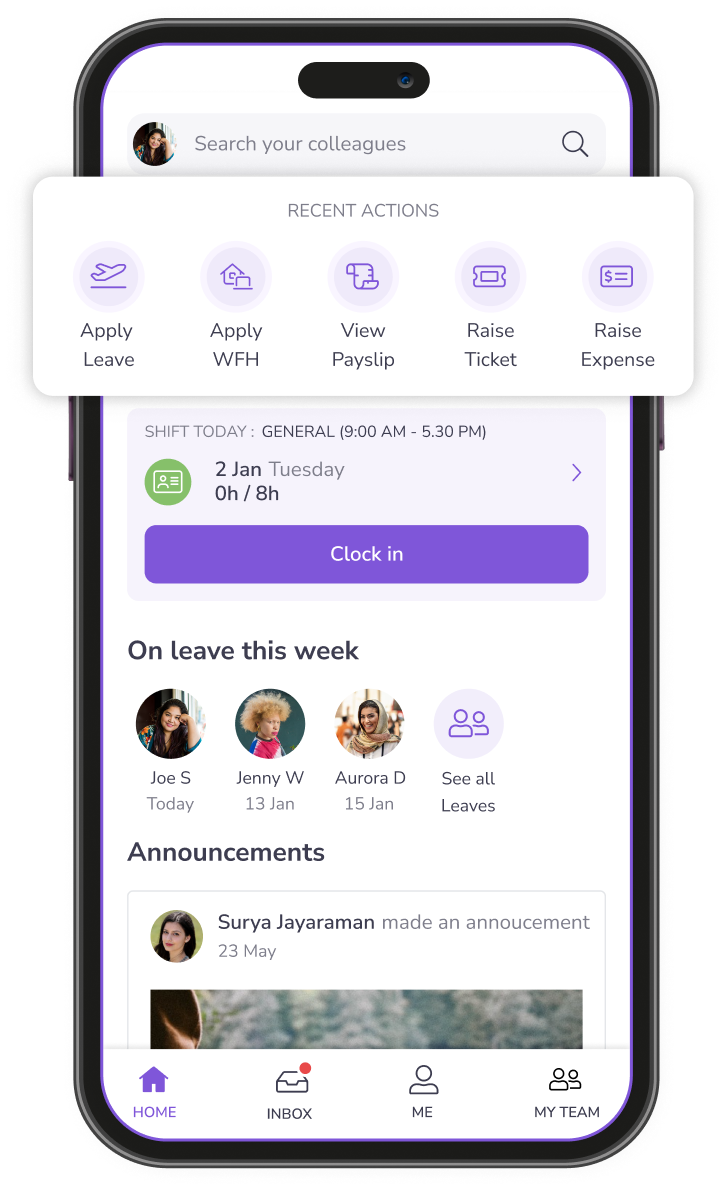
Every payroll vendor demo shows the same thing: a clean dashboard, a one-click payroll run, and a smiling employee checking a payslip on their phone. Thirty minutes later you have learned almost nothing that would help you choose between two products.
The differences that matter only surface in month three, when a mid-month joiner needs a pro-rated arrear with retrospective PF impact. This guide is built around those differences.
1. Statutory coverage: the non-negotiable layer
Indian payroll is not a calculation problem, it is a compliance problem. Any system you consider must handle the full statutory stack without manual workarounds:
- Provident Fund (PF) — including the ₹15,000 wage ceiling, voluntary contributions, and the distinction between employee and employer shares with EPS/EDLI splits
- ESI — the ₹21,000 threshold, and correct handling of employees who cross it mid-year
- Professional Tax — this is state-specific, with different slabs and filing cycles in Maharashtra, Karnataka, West Bengal and Tamil Nadu
- TDS on salary — old and new regime, employee declarations, Form 16 and Form 24Q generation
- Labour Welfare Fund — applicable in some states only, often forgotten entirely
- Gratuity and bonus — accrual tracking, not just payout calculation
Ask specifically: who updates the statutory rules when they change, and how fast? A vendor that expects you to edit tax slabs yourself is selling you a calculator, not payroll software.
2. The edge cases that break systems
Routine payroll is easy. Here is what actually separates products:
- Mid-month joiners and leavers — pro-rating basic, allowances and statutory deductions correctly
- Retrospective arrears — a promotion backdated two months changes PF, ESI and TDS for those months
- Loss of pay interacting with statutory minimums — heavy LOP can push wages below minimum wage thresholds
- Full and final settlement — leave encashment, gratuity, notice recovery, and TDS on the lot
- Multi-state employees — different PT, different minimum wages, sometimes different leave rules
- Reimbursements and flexible benefit plans — taxable versus exempt treatment with bill submission
3. Integration: payroll does not stand alone
Payroll consumes data from attendance and leave, and feeds data to finance. Every manual handoff between those systems is a monthly opportunity for error.
- Attendance and leave — does LOP flow in automatically, or does someone paste a spreadsheet?
- Accounting — can it export journal entries matching your chart of accounts in Tally, Zoho Books or SAP?
- Banking — does it generate bank-specific salary upload files for your bank, or a generic format you reformat by hand?
- Hiring — do new joiners arrive with their data already populated?
A single integrated HRMS avoids these handoffs by design. If you are buying point solutions instead, budget real time for the glue between them.
4. Understand what you are actually paying
Per-employee-per-month pricing is easy to compare and easy to misread. Check:
- Is the price per active employee, or per record including leavers?
- What does implementation and data migration cost?
- Are statutory filings and Form 16 generation included or priced separately?
- Is support included, and at what response time? Payroll support that answers in 48 hours is useless on payday.
- What happens to your data if you leave — can you export everything, in a usable format?
5. A scoring framework you can actually use
Rate each shortlisted product 1–5 on these, weighted for your situation:
- Statutory accuracy and update speed (weight this highest — errors here carry penalties)
- Edge case handling — your three awkward cases from the start of this article
- Attendance and leave integration
- Employee self-service — payslips, tax declarations, reimbursement claims
- Reporting — can you answer a CFO question without exporting to Excel?
- Audit trail — who changed what, when; essential during inspections
- Support quality during payroll week
- Total three-year cost, not month one
Questions to ask every vendor
- Show me a backdated salary revision with its statutory corrections.
- How quickly did you ship support for the most recent statutory change?
- Can I reverse a finalised payroll run, and what does the audit trail show?
- Which banks do you have native salary file formats for?
- What is your payroll-week support SLA, in writing?
- If we leave, what exactly can we export?