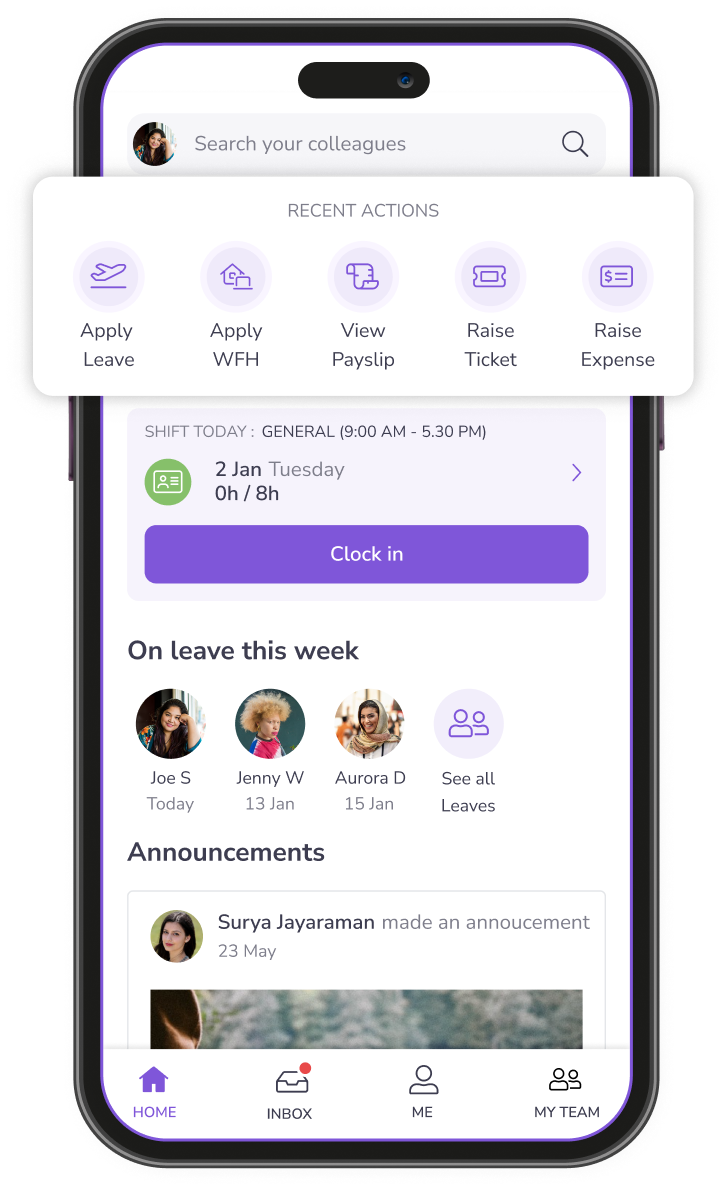
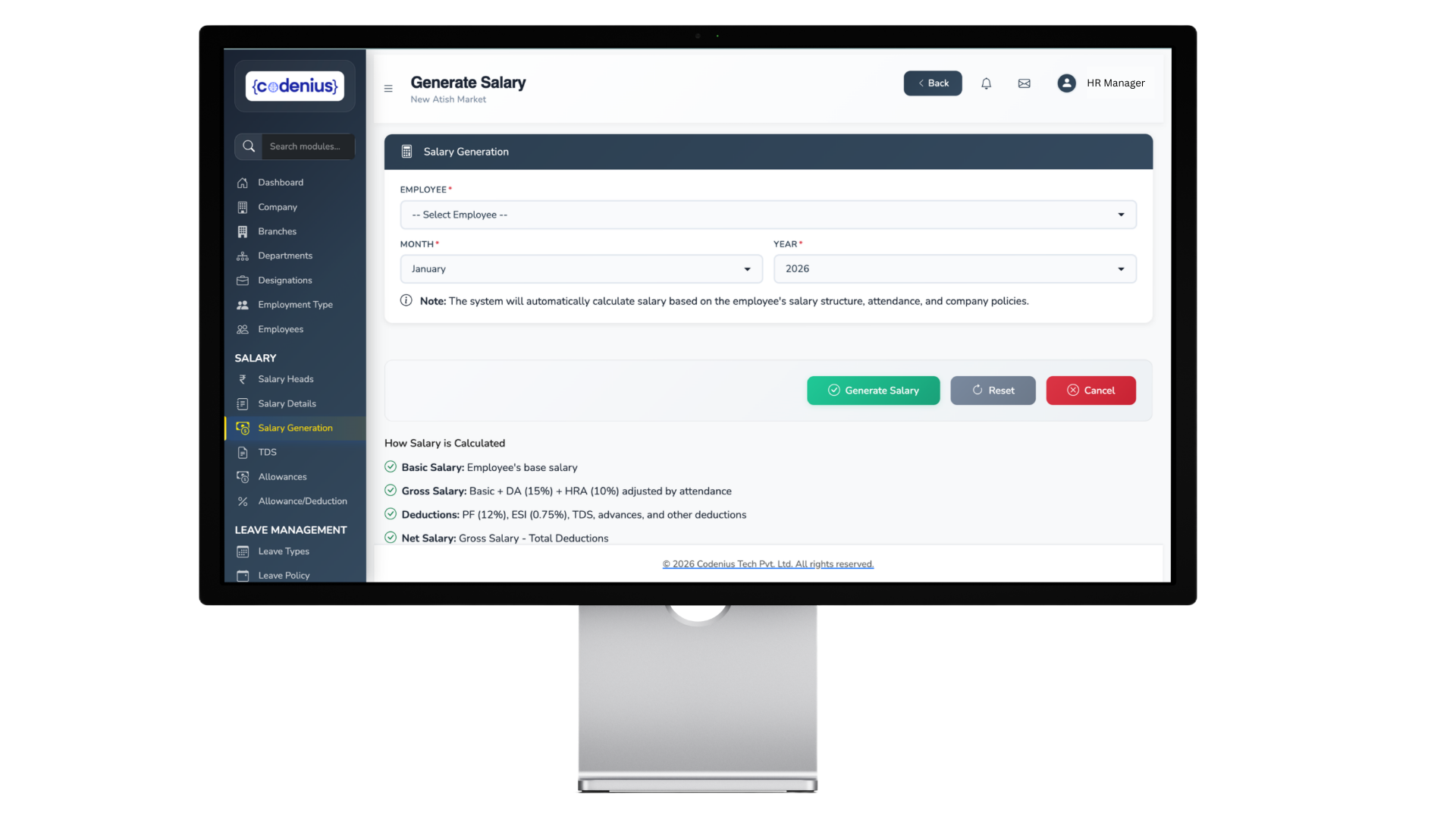
Search for HR software and you will be offered an HRIS, an HRMS and an HCM platform, often by the same vendor on the same page. The distinctions were once real. Today they are mostly marketing, but understanding the original meaning still helps you read a feature list.
HRIS: Human Resource Information System
Historically the system of record. Its job was to hold employee data accurately:
- Employee master data and documents
- Organisation structure and reporting lines
- Job and position history
- Compliance records
- Basic reporting
An HRIS answers "who works here, in what role, since when". It is a database with workflow around it.
HRMS: Human Resource Management System
An HRIS plus the operational processes that run on that data:
- Everything in an HRIS
- Attendance and time tracking
- Leave management
- Payroll processing
- Employee self-service
- Onboarding and exit workflows
The defining addition is payroll. In the Indian market, HRMS is the term most used for integrated HR and payroll platforms, and that is a sensible use of it.
HCM: Human Capital Management
An HRMS plus the strategic talent layer:
- Everything in an HRMS
- Recruitment and applicant tracking
- Performance management and goals
- Learning and development
- Succession and career pathing
- Compensation planning
- Workforce analytics
Why the labels stopped being useful
Three things collapsed the distinction:
- Feature convergence. Every serious product now covers core HR, payroll and self-service. The floor rose.
- Modular selling. The same platform is positioned as whichever acronym the buyer searched for.
- Buyer language. HR teams say "HR software" and mean whatever solves their current problem.
What to evaluate instead of the label
Ignore the acronym and ask about capability depth in the areas you actually need:
- Is payroll native or partnered? A platform that integrates a third-party payroll engine behaves very differently from one that owns it — particularly when something goes wrong and you need one accountable vendor.
- Does attendance feed payroll automatically? This single integration eliminates the most common monthly error source.
- How deep is statutory coverage? Global HCM platforms are often weak on Indian PF, ESI, PT and TDS specifics.
- Is the talent layer real or a checkbox? Ask to see a full performance cycle configured, not a screenshot.
- Can one employee record carry everything? Hiring through exit, without re-keying.
Choosing by company stage
- Under 50 employees — core HR, payroll, leave and attendance. Talent modules will go unused.
- 50–250 — the HRMS sweet spot, plus an ATS as hiring volume grows. Performance management starts to matter.
- 250–1,000 — full HRMS with real performance and learning capability, and analytics that answer questions without exports.
- Over 1,000 — HCM scope, usually with multi-entity and multi-country considerations.