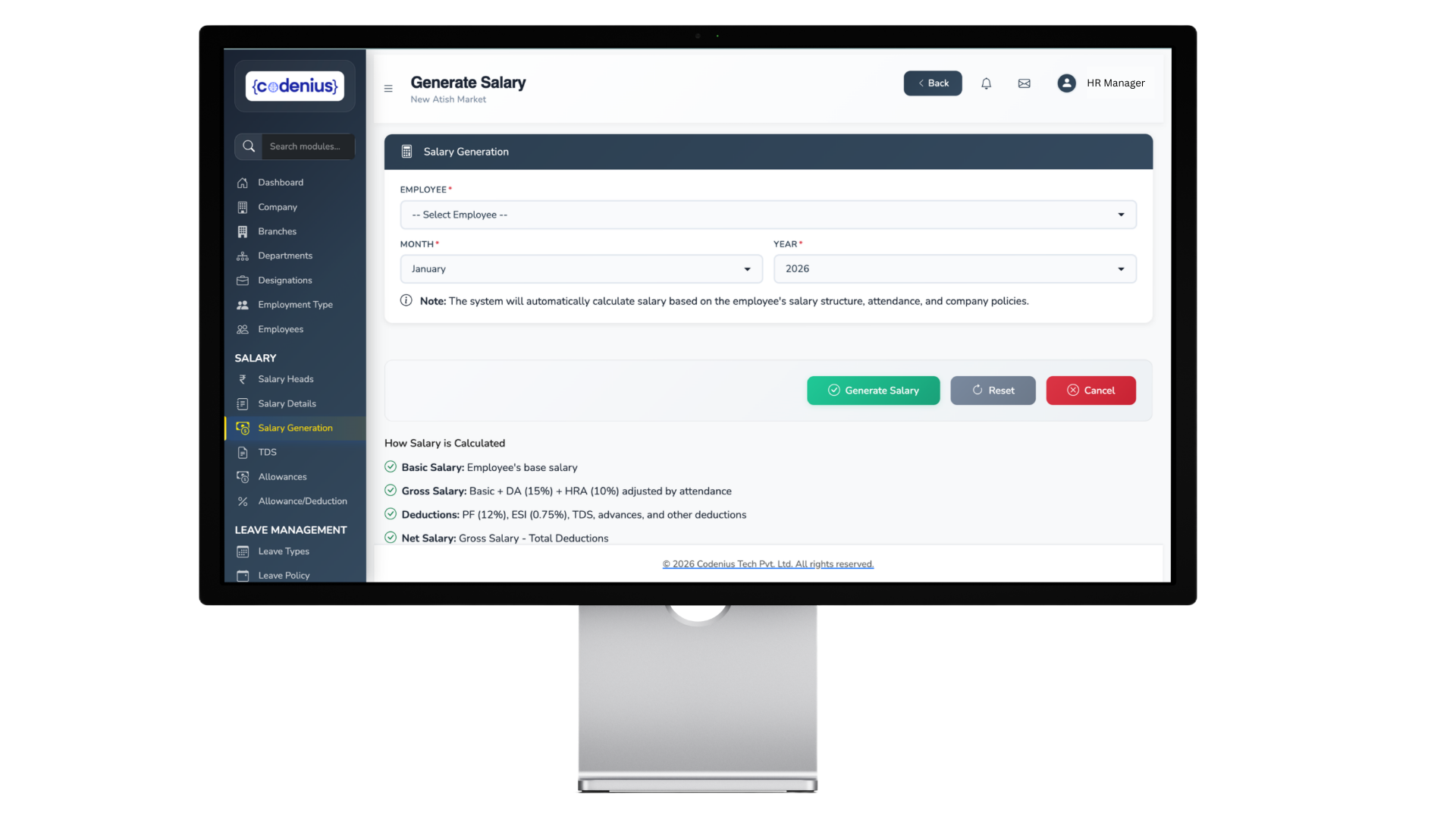
Payroll goes wrong in predictable places. Almost every error traces back to a missing control at one of eight stages. This is the full cycle, with the check that belongs at each step.
Stage 1: Define the payroll calendar
Before the month starts, everyone should know the dates:
- Attendance cut-off — commonly the 25th, giving processing time before month end
- Input freeze — the deadline for new joiners, exits, salary revisions and reimbursement claims
- Processing window — calculation and verification
- Payment date — statutorily, wages must be paid by the 7th of the following month for establishments with under 1,000 employees
- Filing dates — PF and ESI by the 15th, TDS by the 7th
Publish this calendar. Most "urgent" mid-processing changes exist because nobody knew the deadline.
Stage 2: Collect and validate inputs
Payroll is only as good as what goes into it:
- Attendance and leave data, with LOP days identified
- New joiners — with PAN, Aadhaar, bank details, PF/UAN, and a salary structure
- Exits — last working day, notice period status, leave balance
- Salary revisions, including any effective-from dates in the past
- Variable pay, incentives, overtime
- Reimbursement claims with supporting bills
- Loan and advance deductions
Stage 3: Calculate gross earnings
Build up each component:
- Basic salary — pro-rated for part-month employment
- House Rent Allowance — typically 40–50% of basic
- Special and other allowances
- Overtime — at statutory rates where applicable
- Variable and incentive pay
- Arrears from retrospective revisions
Pro-rating formula for a part-month: monthly component ÷ total days in month × payable days. Be consistent about whether you use calendar days or working days — mixing the two across components is a classic source of small, hard-to-trace discrepancies.
Stage 4: Apply statutory deductions
- PF — 12% of PF wages from the employee, 12% from the employer, subject to the ₹15,000 ceiling unless you contribute on actual wages
- ESI — 0.75% employee and 3.25% employer, for those earning up to ₹21,000
- Professional Tax — per the employee's work state slab
- TDS — based on projected annual income, declared investments and chosen regime
- Labour Welfare Fund — where applicable
Stage 5: Apply other deductions
- Loan and salary advance recoveries
- Notice period recovery for exits
- Insurance premium contributions
- Canteen, transport or asset recoveries
Stage 6: Verify before you pay
This is the stage most often skipped, and the one that saves the most pain. Run these checks every cycle:
- Headcount reconciliation — opening + joiners − leavers = closing. Any mismatch means a missing input.
- Variance analysis — compare each employee against last month. Investigate anything moving more than 10% without a known reason.
- Total gross variance — explain the month-on-month change in one sentence. If you cannot, something is wrong.
- Zero and negative net pay — always an error or an exception needing sign-off
- Statutory sanity check — PF should be roughly 12% of PF wages in aggregate; a big deviation signals a configuration problem
- New joiner and exit spot check — manually verify these individually, every month
Stage 7: Approve and disburse
- Get documented sign-off from finance on the payroll register
- Generate the bank advice file in your bank's format
- Release payment, and confirm the bank acknowledgement
- Publish payslips to employee self-service
- Handle any failed payments immediately
Stage 8: File and record
- PF ECR — file and pay by the 15th
- ESI return — by the 15th
- TDS — deposit by the 7th, quarterly Form 24Q
- Professional Tax — per state cycle
- Statutory registers — wage register, attendance register, maintained and current
- Post the payroll journal to accounts
Related Blogs
How to Choose Payroll Software in India: A 2026 Buyer's Guide
Oct 10, 2026
Applicant Tracking Systems: What They Fix and What They Do Not
Oct 15, 2026
Attendance Management: Choosing a System That Payroll Can Trust
Oct 14, 2026